
Air Liquide Offices – Dusseldorf
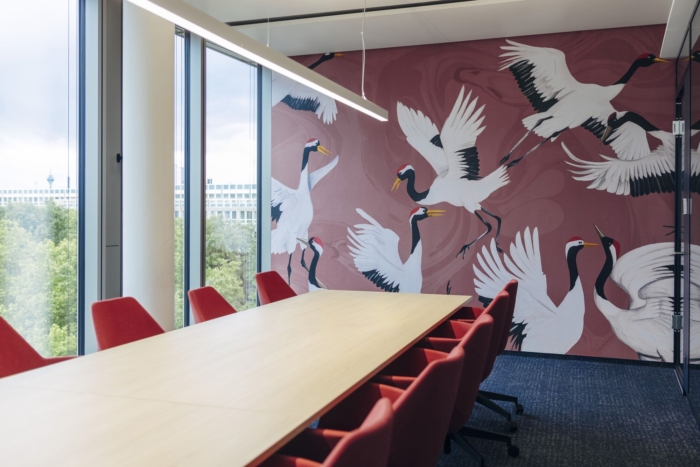
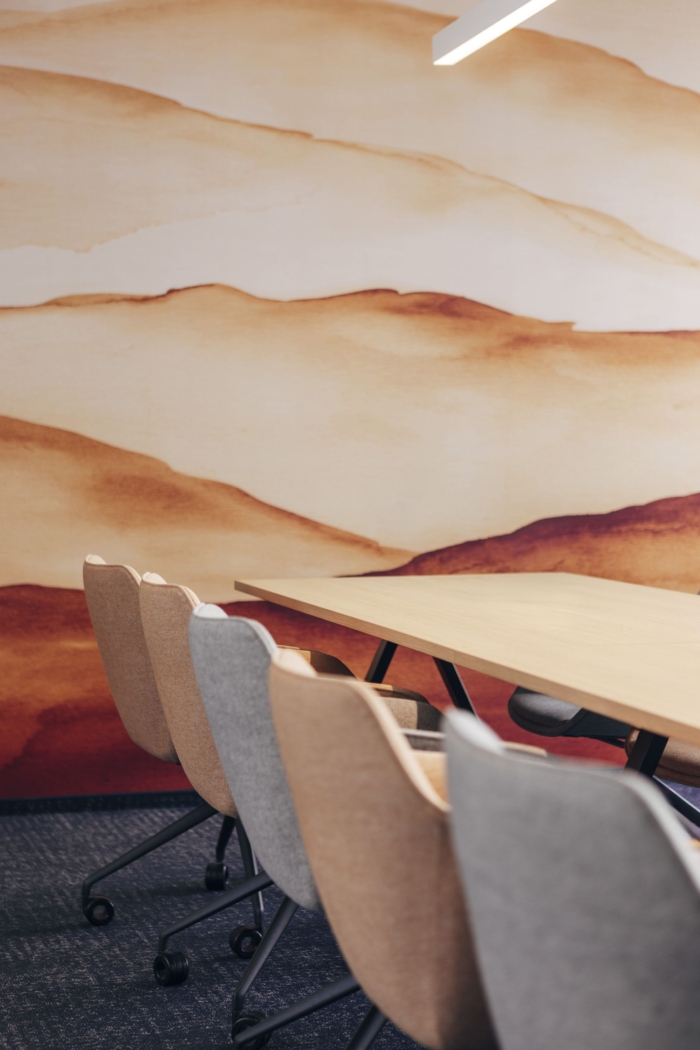
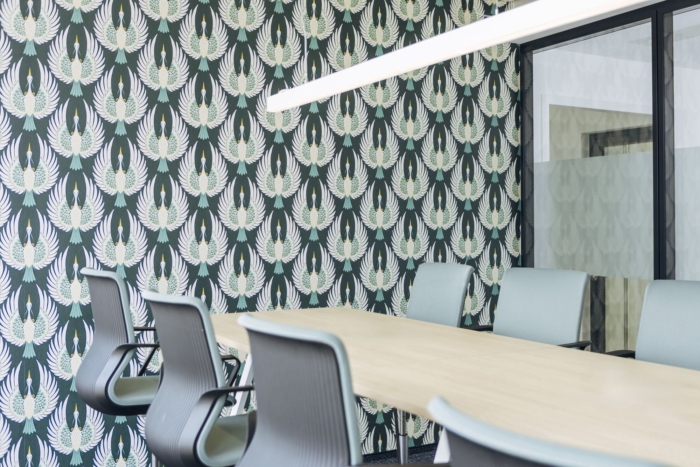
CSMM – architecture matters reimagined Air Liquide Offices in Düsseldorf, Germany, creating a vibrant, participatory work environment that embodies collaboration and reflects the company’s cultural transformation.
Air Liquide relied on the architecture and consulting firm CSMM for the design process of its Düsseldorf location. The 4,500 square meter space was to be designed as a modern work environment – with a focus on employee participation.
Air Liquide’s move to new offices not only meant a change of location, but also a profound cultural and organizational transformation – from a single-story office to the development of a comprehensive New Work concept. Management recognized the importance of involving employees in the process from the very beginning to increase acceptance of the new work model and incorporated change management as an integral part of the project. JLL, the world’s leading provider of real estate services, supported the change process in the form of workshops with employees. Air Liquide enlisted CSMM to design the corresponding spatial concept.
Together, they focused on needs-based planning and participation in the process. For this purpose, so-called “change agents” were selected from various departments to act as multipliers and initiators within the company. The first step was to develop a shared basic understanding of spatial relationships and design principles. CSMM took on the task of introducing the participants to architecture and design – with the goal of raising awareness of the impact of spaces and facilitating dialogue on equal terms. What initially seemed unfamiliar and abstract to many developed into an important moment of identification over the course of the process – because the goal was to answer questions about their working methods and spatial concepts and to visualize these in the form of a collage.
The individual contributions formed the basis for the collaborative development of the color and material concept – and gave the project a personal touch. “In change processes like this, personal engagement with the topic and the commitment of those involved are key success factors,” says Tiziana Feighofen-Longo, Site Manager at CSMM Düsseldorf. “In this case, the employees were very confident in their ideas. To promote interactive exchange between them and us designers, we worked collaboratively on collages and material compilations in our materials library.”
Design together, develop effectiveness
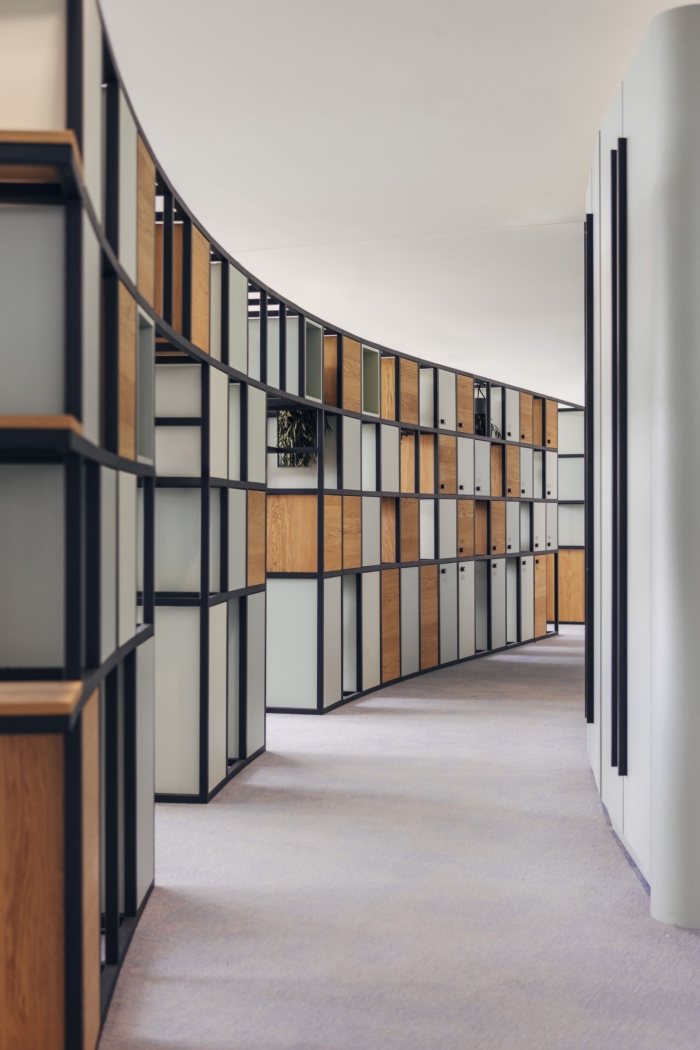
And suddenly, we were in the midst of a creative, collaborative design process to structure the oval space and create orientation and spatial vibrancy. Those involved increasingly developed an objective perspective, weighing and discussing the pros and cons. The current cloverleaf concept was thus developed through close collaboration and the direct influence of employees. “For me, being involved in the participatory workshops on the design of our new workplace was a very positive and by no means a given experience,” reports Tim Harmes, Business Developer at Large Industries. “The exchange of many different perspectives was particularly inspiring. The collaborative brainstorming enabled us to find concrete solutions to challenges in our daily work.”
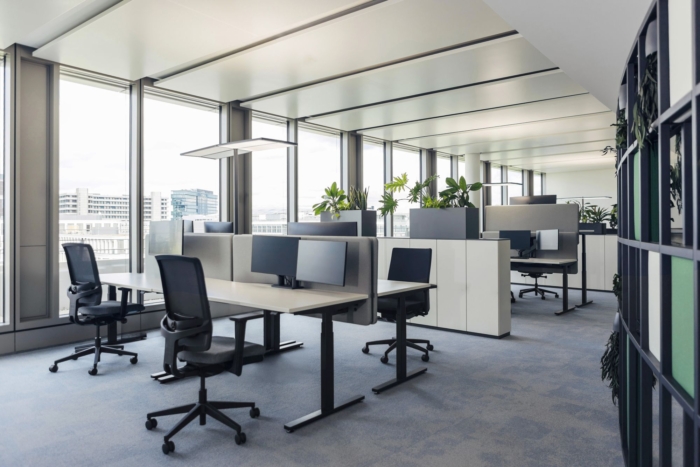
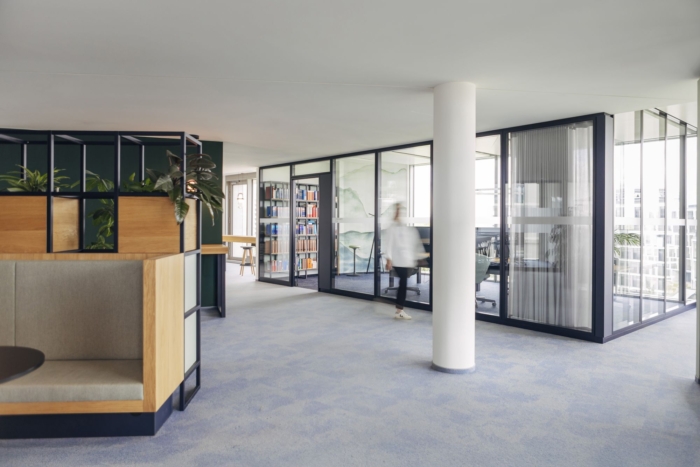
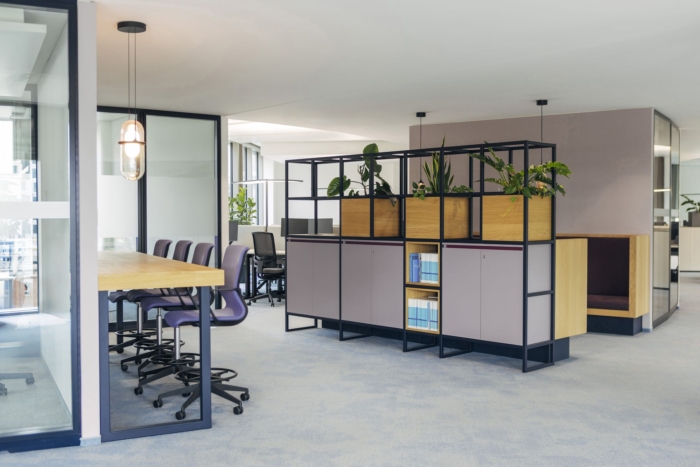
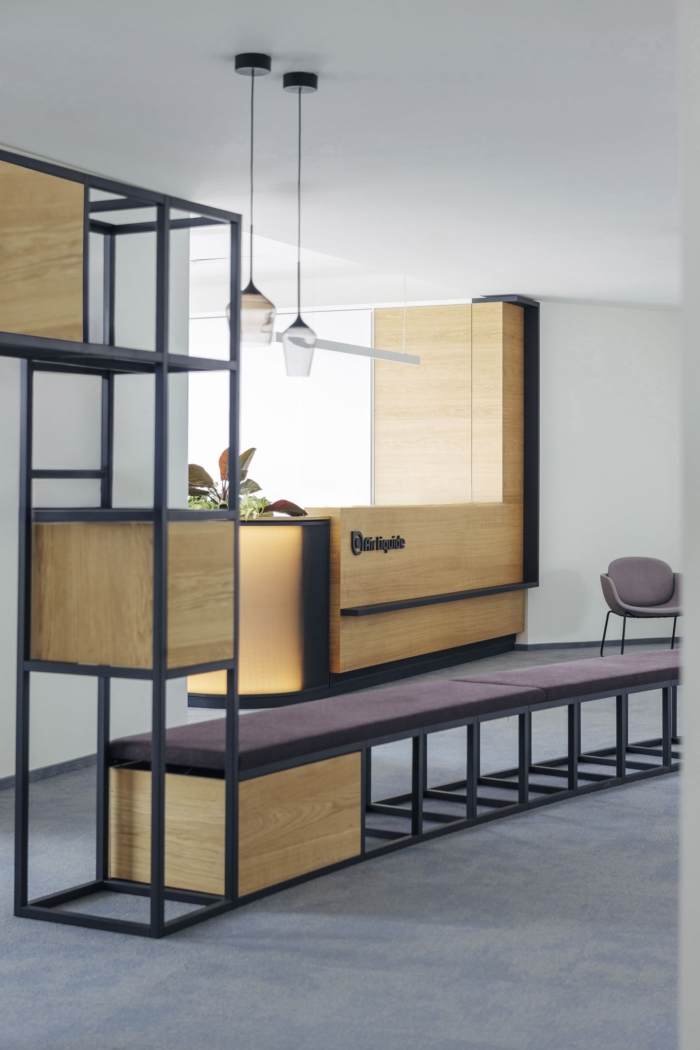
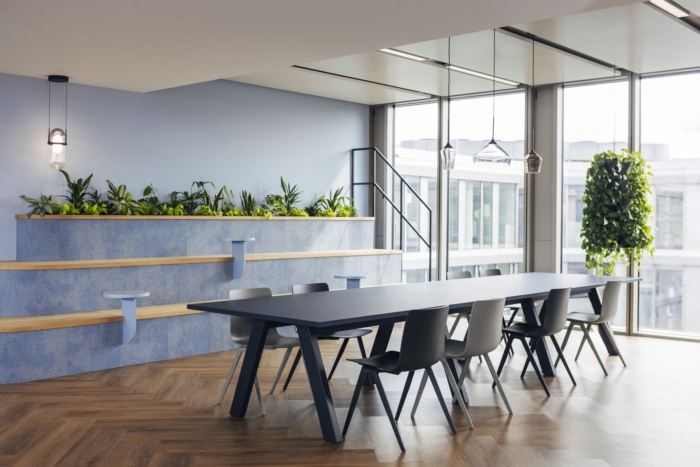
Gradually, the relevant trades were integrated into the planning process, and concepts were developed for individual areas by integrating specialists from individual fields, such as reception or facility management, in addition to the core team. The process resulted in an agile work environment with a central zone that extends as a continuous design element along the workstations on all floors. In these multifunctional areas, employees find both retreats for concentrated work and space for spontaneous meetings and collaboration.
Spaces as a reflection of corporate culture
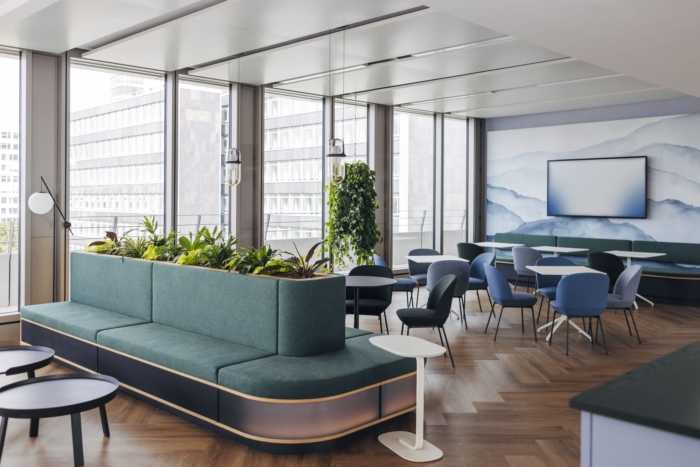
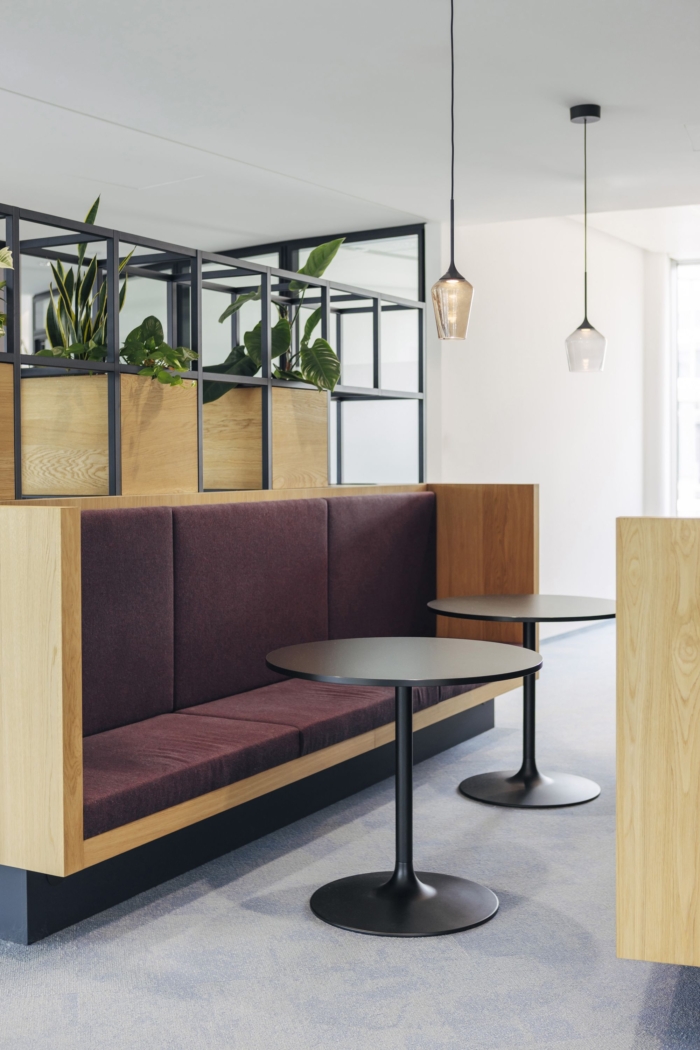
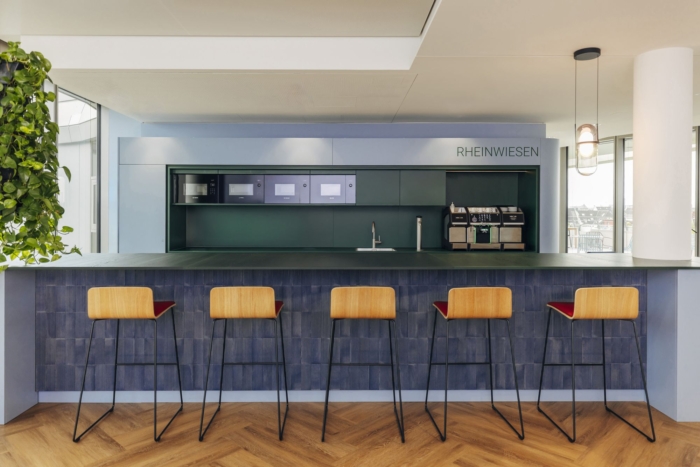
The central core of the new spatial concept is the Work Café – a versatile meeting place with two connected areas. Stands, lounge islands, and bistro seating groups create a diverse ambiance that offers space for individual downtime as well as inspiring team discussions. “We have observed how the collaborative design of the new workplace, especially the common areas, promotes collaboration,” says Stephanie Schiest’l, Senior HR Business Partner at Air Liquide, summing up the new office space. “One concrete example is our new Work Café, which is very intensively used and is excellently designed – direct proof of the added value of this participatory approach.”
Overall, Air Liquide’s transformation process is evident in the new premises: away from individual offices and toward a place of collaboration. The high level of employee acceptance demonstrates the value of viewing the move as an opportunity to rethink corporate structures and working practices and empower teams to collaborate. This transformation was made possible through personalized consulting and support – right from the start.
Design: CSMM – architecture matters
Photography: courtesy of CSMM






Now editing content for LinkedIn.