

IPG Offices – Chicago
TPG Architecture’s IPG offices in Chicago reimagines workspace design, blending collaboration with individuality in a historic setting, fostering a vibrant environment that honors local heritage while embracing modernity and sustainability.
IPG’s new 77,599-square-foot footprint within Chicago’s Merchandise Mart brings together two of its major brands, Golin and Weber Shandwick, in a state-of-the-art workspace designed to inspire collaboration. The iconic Merchandise Mart is a symbol of Chicago’s commercial heritage and innovative spirit – and this connection to the city’s history was intentional, grounding the global IPG brands in their Chicago roots while positioning them for the future.
TPG Architecture developed a planning concept that encourages the flow of movement and ideas across the office’s ultrawide layout, while celebrating the two brands’ unique cultures and work styles in their respective zones.
“The design process was deeply collaborative, with leadership working closely with teams to understand exactly what they needed to thrive. ‘Functionality was absolutely key,’ notes Sheila Mulligan, President of Weber Shandwick’s Central Region. ‘We’ve seen other large office spaces that looked beautiful but didn’t optimize usage or create the work formats people actually need. Every square inch here works hard for us.'”
While drawing inspiration from Chicago’s Art Deco heritage, the design translates these classic elements into a thoroughly modern context that represents the agencies’ position as industry leaders.
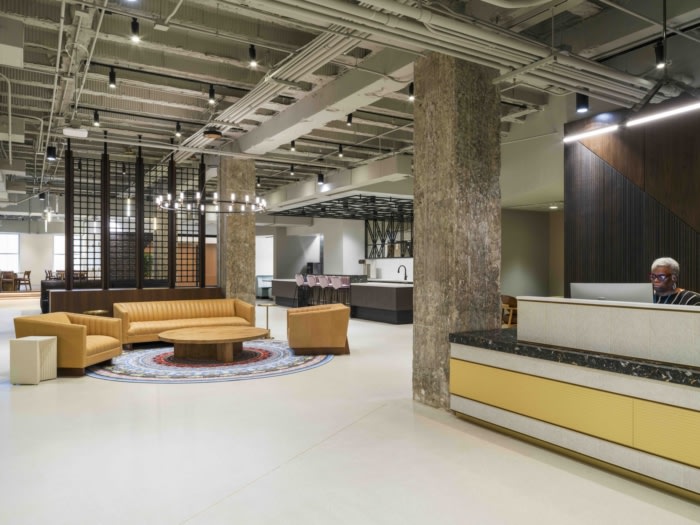
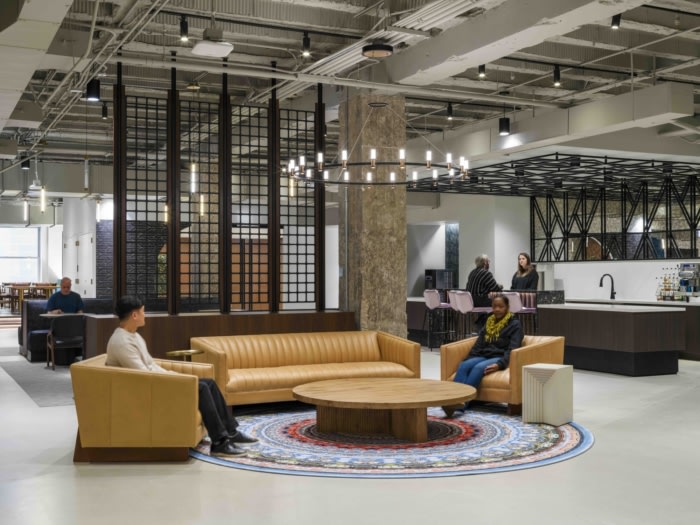
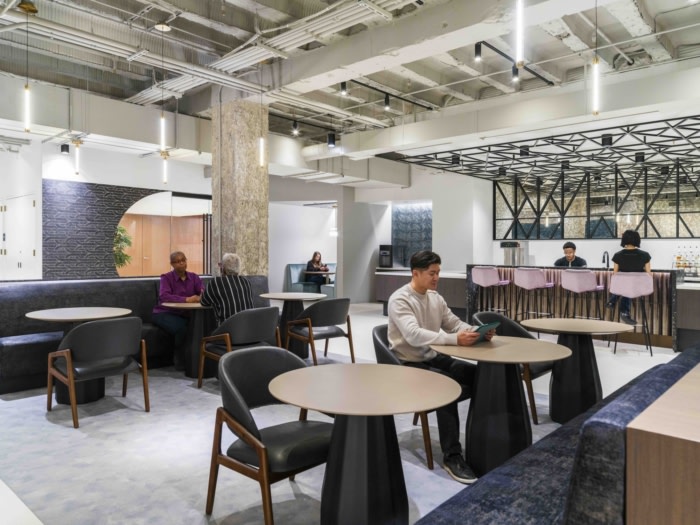
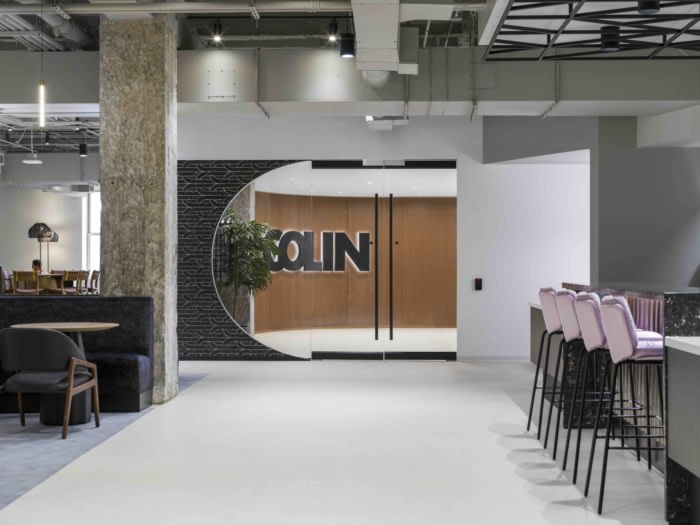
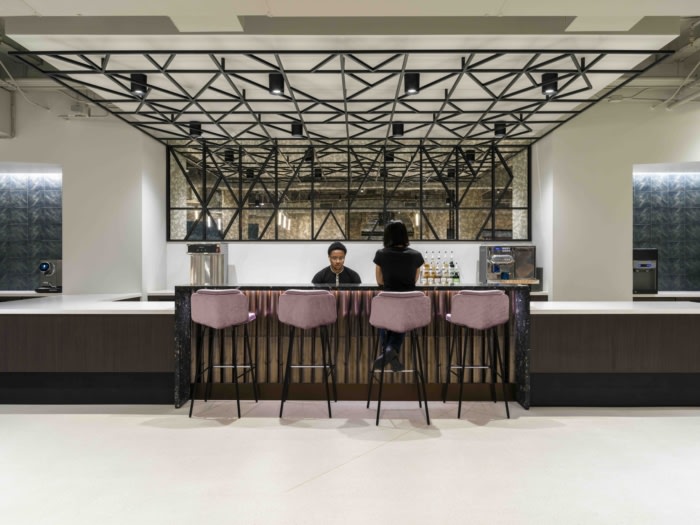
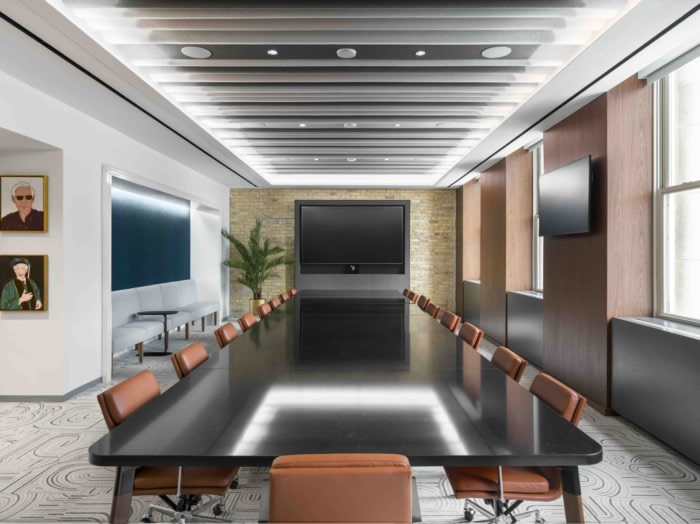
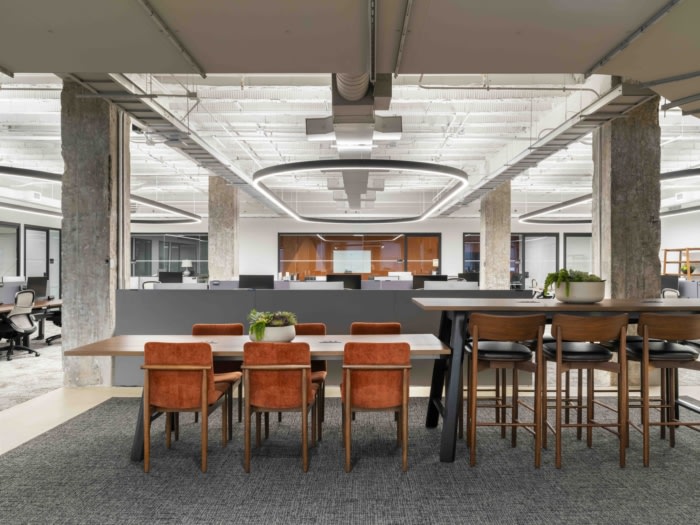
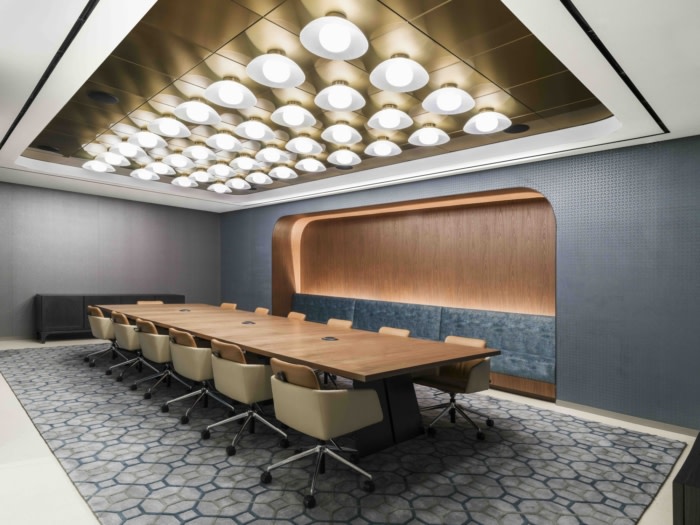
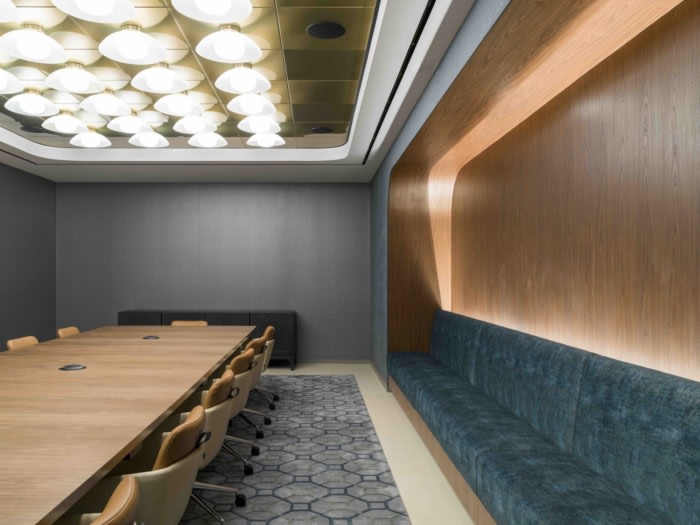
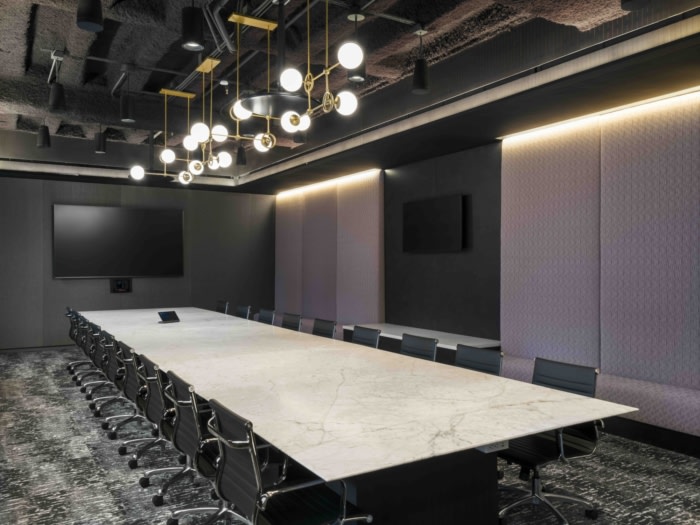
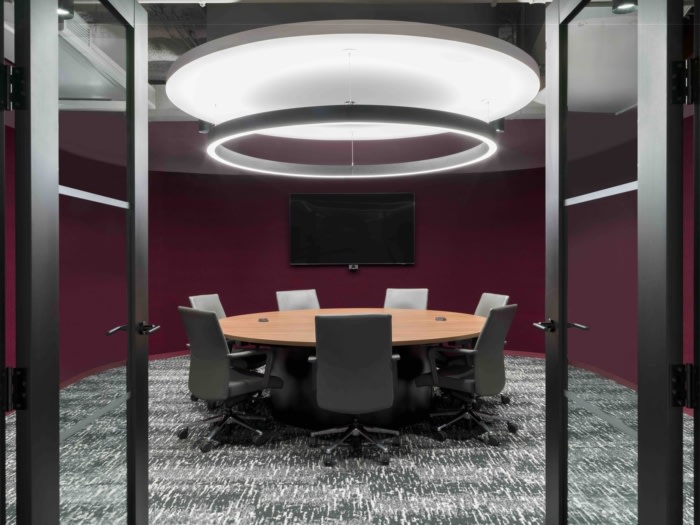
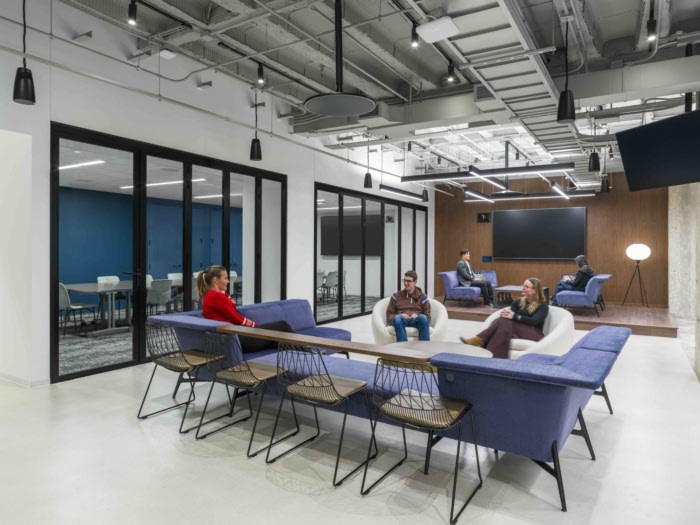
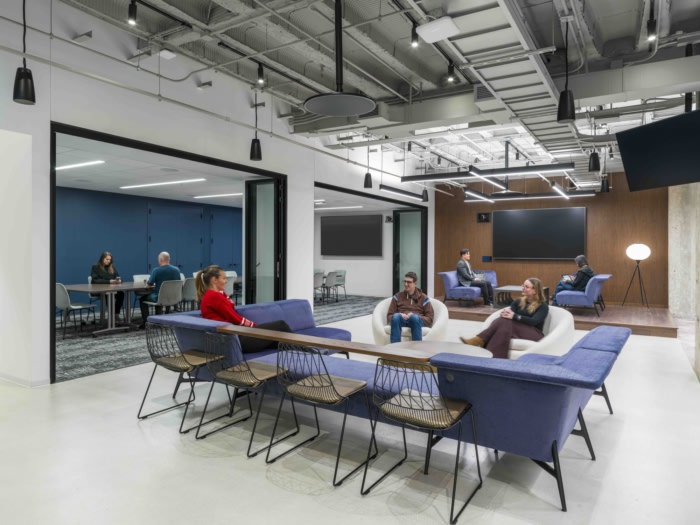
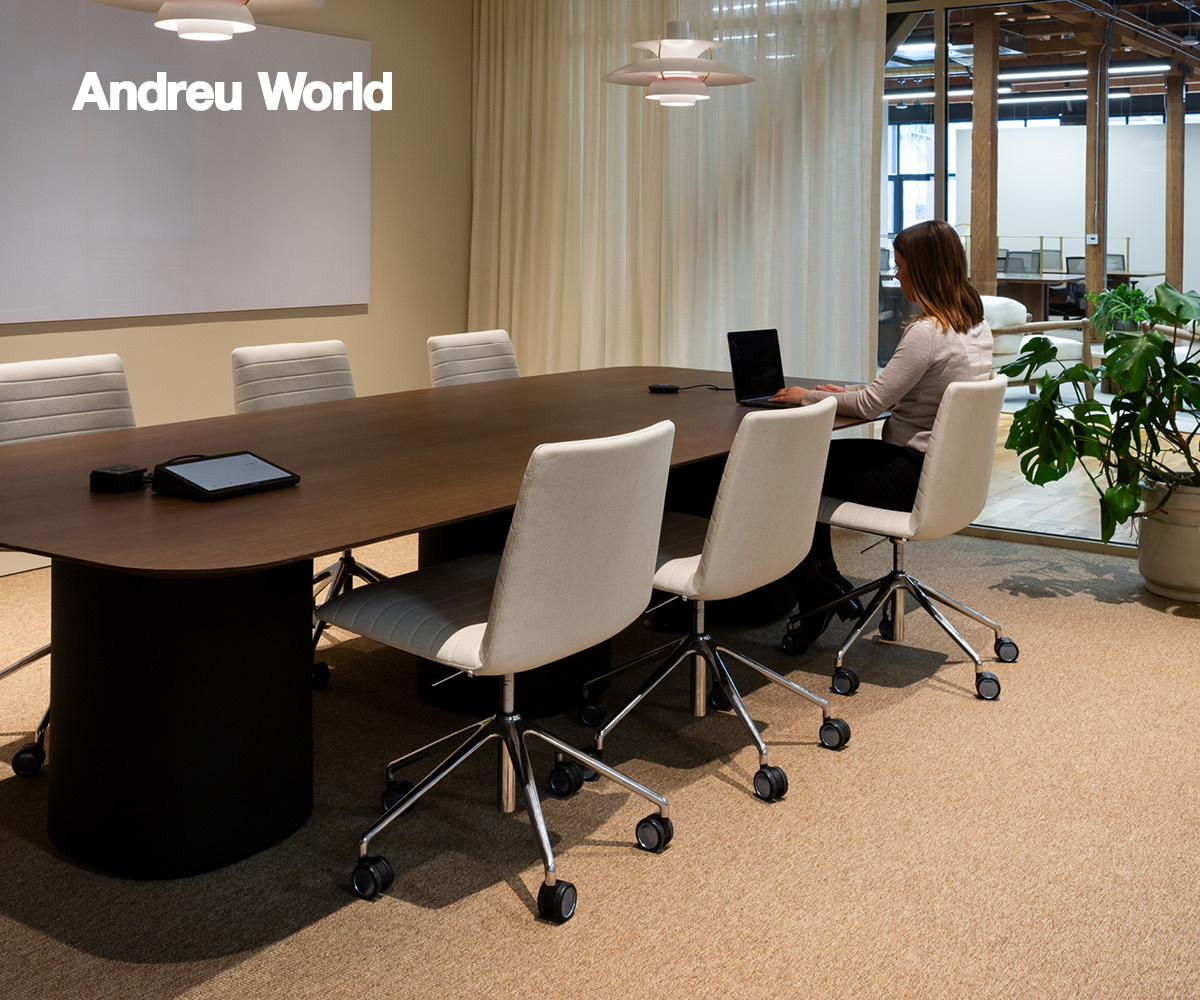
A large, shared reception and cafe space serves as the main point of entry and center of daily activity. The use of metalwork, patterned wallpaper, raw concrete columns, and open ceilings creates an authentic, vibrant, and locally inspired environment. This communal space stretches the width of the plan, placing synergy and interaction at the heart of the subdivided program. An agency agnostic conference room sits opposite the reception desk, allowing teams to further come together for client presentations.
Brand entries branch off from the center of the café and are treated as showcase spaces for the respective brand’s work. Each space is uniquely designed through distinct color palettes and materials. The showcase provides a unique arrival moment for employees of both brands, differentiating them from the shared space while working together cohesively within the overall scheme. On one end, the geometry of Golin’s half circle glass entry reflects the shape of a “G”, accentuated by an Art Deco-inspired graphic cork wallcovering — an abstracted reinterpretation of theatrical draping of fabric.
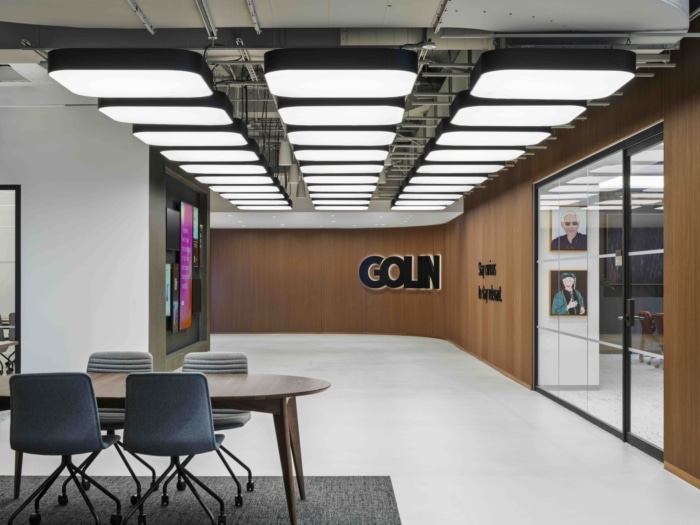
Golin’s bold black logo is set against a backdrop of walnut wood paneling, a mid-century detail designed to connect its deep history in Chicago and the glory days of advertising. AV and streaming media were integrated into two separate installations, highlighting Golin’s influence on social media and digital content. The array of screens in various sizes are surrounded by a textured, dark metallic wallcovering that helps to unite the entrance, showcase space, and adjacent open work areas.
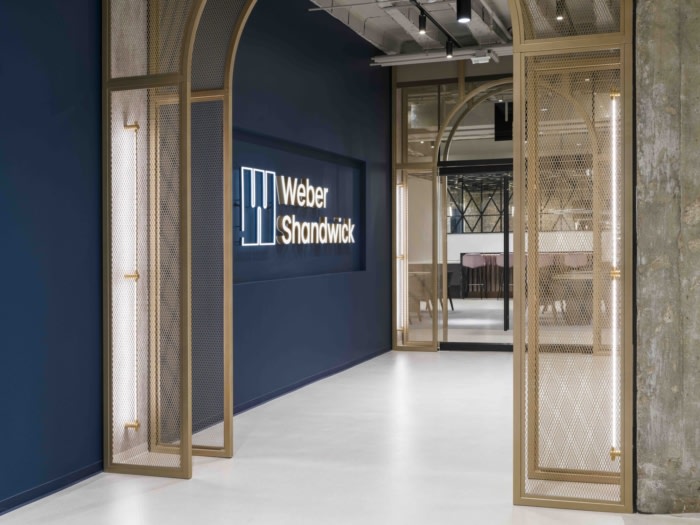
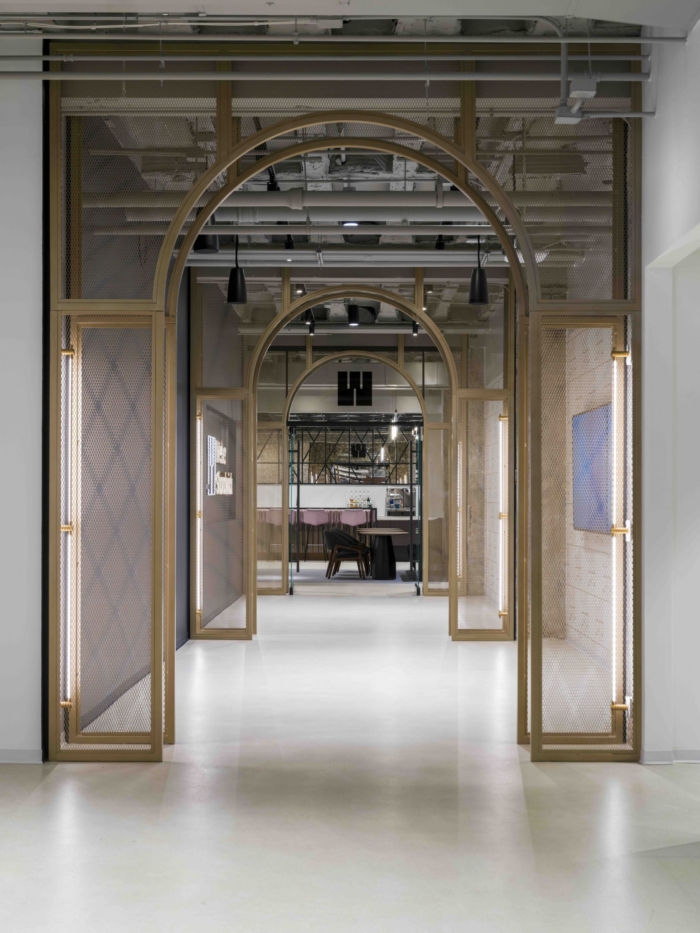
On the other end, Weber Shandwick’s showcase captures its unique culture with a sense of transparency, digital integration, and a touch of whimsy. A series of custom-designed metal mesh archways creates the illusion of a barrel vault, leading visitors into the main boulevard of open and enclosed meeting spaces. The arch motif was inspired by an architectural detail of the building’s penthouse façade, and its champagne metallic color references an Art Deco color palette, which ties back to champagne metallic accents throughout the Weber Shandwick workspace. The neon W featured in the logo adds an extra layer of intrigue, with a single large screen highlighting the latest achievements and digital content. Each brand within The Weber Shandwick Collective, the conglomerate led by Weber Shandwick, are represented through a custom wallcovering featuring the Collective’s logo that runs the entire length of one side of the space.
The space has quickly become a magnet for client engagement and business development. Major clients like Mars and Kellanova regularly use the facilities, while the central Chicago location makes it ideal for new business meetings and executive leadership gatherings. The office serves as both workspace and showcase—a living portfolio of what modern communications agencies can achieve.
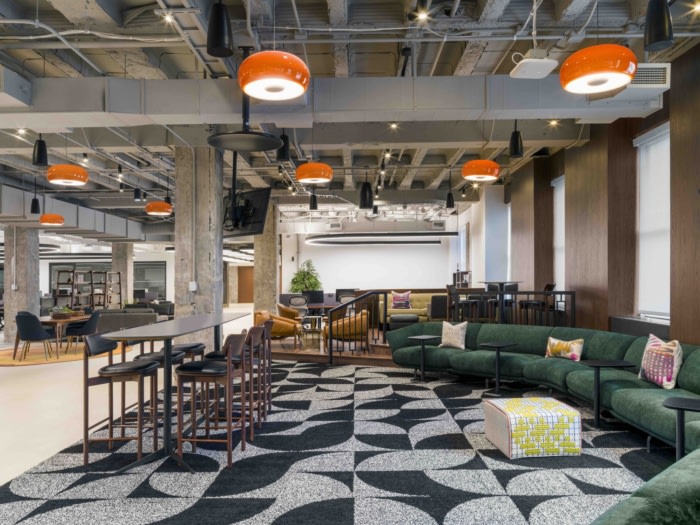
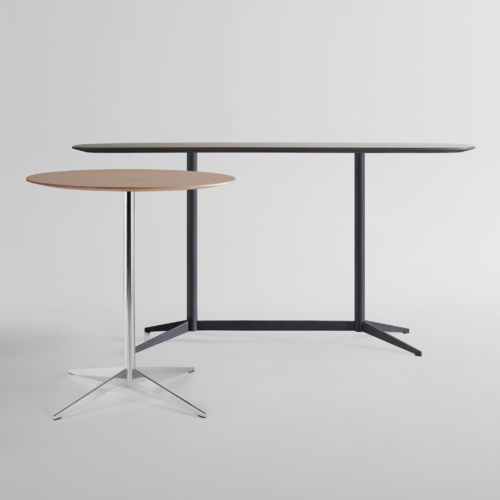
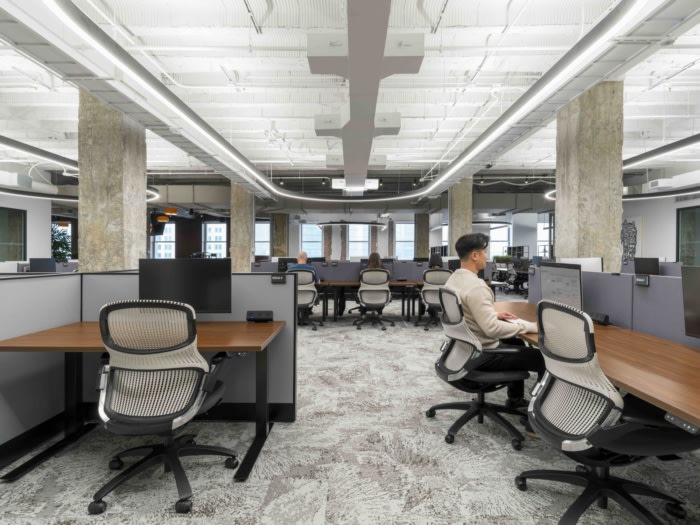
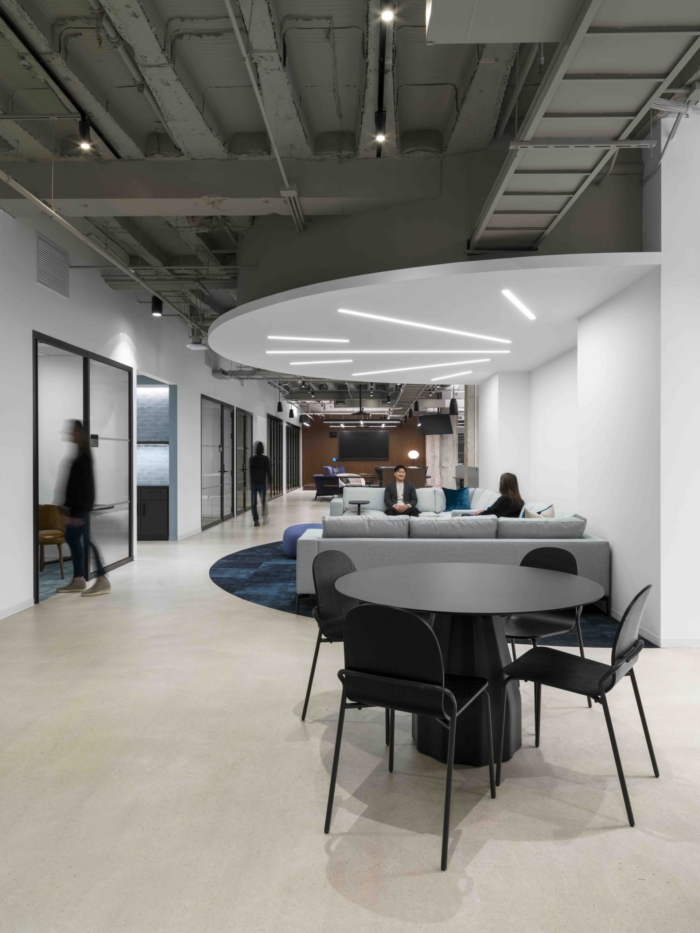
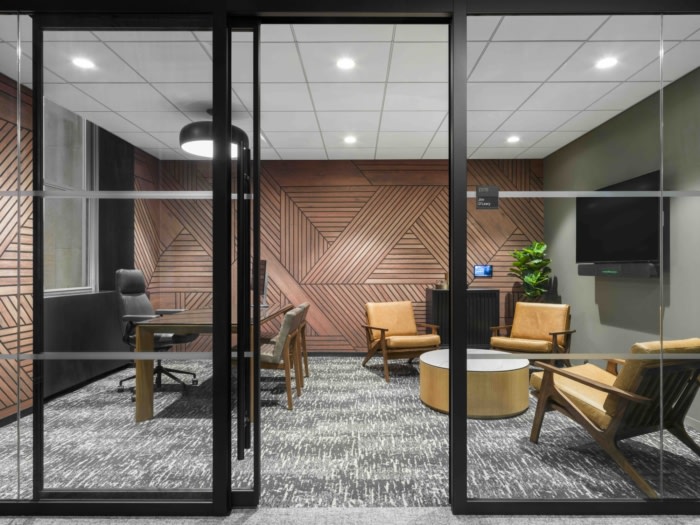
TPG’s design for the dedicated work areas is centered around the bold transition to a new, integrated program, moving away from the traditional 1:1 desk-to-seat ratio to incorporate more variety and dynamism into the teams’ workflows. Optimizing the use of space in accordance with IPG’s hybrid work policy, both agencies have a set of “work” seats (offices and workstations) for approximately 60% of the total headcount, supplemented by “collaboration” seats –– an enclosed room or arrangement with seating for four or more people –– and other alternate workpoints, such as open-plan booths and bar-height tables. TPG’s careful planning strategy ensured that even on the office’s busiest day, there’d be more than enough seating for everyone –– nearly two times enough, in fact.
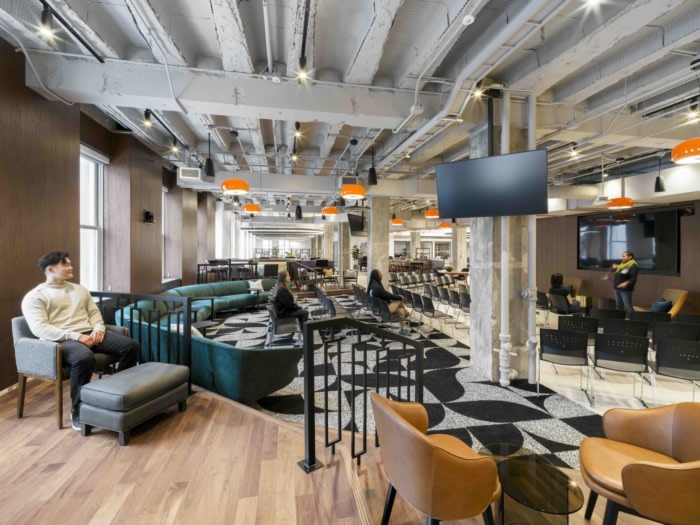
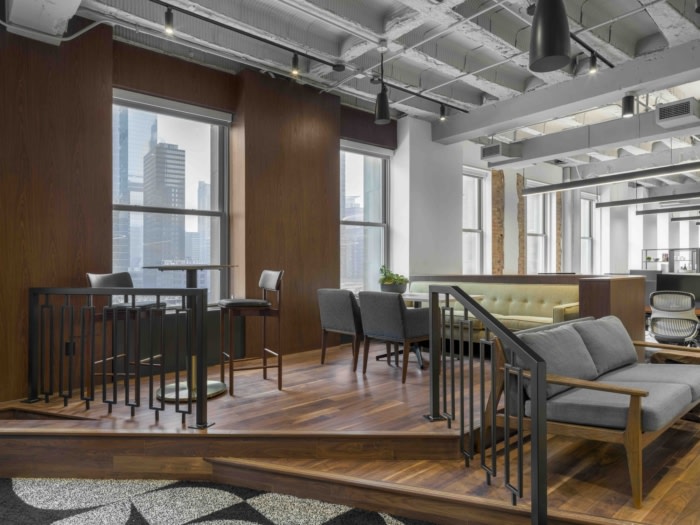
Golin embraced a higher desk-share ratio, creating large open collaboration areas surrounded by flexible meeting rooms. Its showcase hallway filters directly into its town hall space, which plays with different elevations to create dimension between seating arrangements. The absence of informal lounges ensures each vignette is structured for work-focused conversation, minimizing the potential for distractions while encouraging the use of the shared cafe. Moments to highlight Golin’s industry-leading social media tracking tools were designed into the space for prospective clients to experience, and the presentation area within the town hall is equipped to broadcast the company’s infamous trend forecasts each week. Small studio spaces for content creation and filming were also incorporated into the layout.
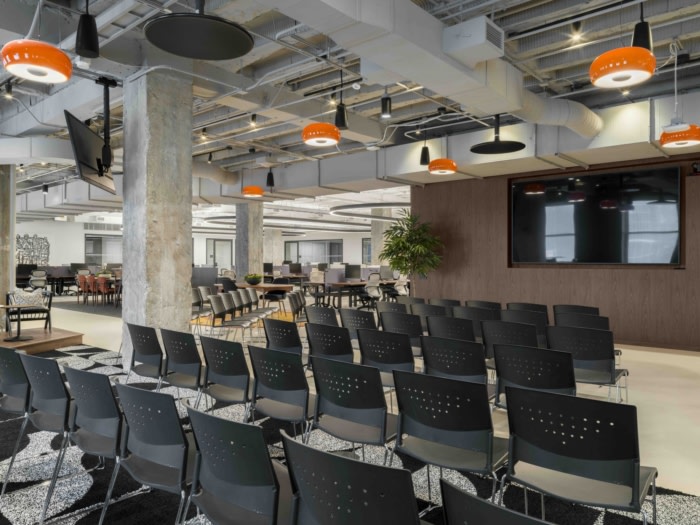
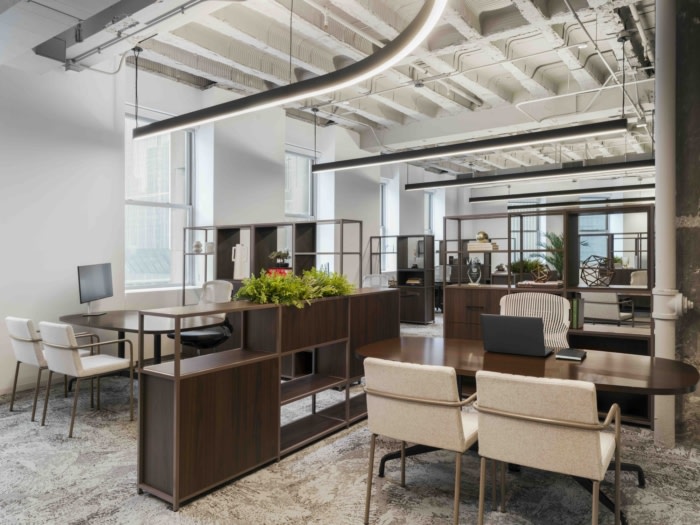
Weber Shandwick opted to maintain a mix of workstations and offices, balancing shared spaces with more private settings. Client-facing meeting rooms and open collaboration spaces were purposely located directly in line with each showcase space, creating a main boulevard of buzz and activity. Its town hall is tucked away at the far end of this boulevard, creating a book-end of specialty feature spaces with the showcase on one end and the town hall on the other. The expansive town hall space was specifically designed to accommodate the entire Chicago community, reinforcing the company’s collaborative culture.
The office’s location along the river was maximized with open vistas and platforms along the window line, bringing occupants closer to the water. Sustainability was also a core focus of the project, with the design targeting LEED Gold certification. The team repurposed as much of the furniture from the existing office as possible, with special attention paid to the use of healthy materials throughout. Where new products were necessary, the design team prioritized sourcing from local manufacturers, including metal fabricator Icon Modern, the metal fabricator and wallcovering company Maya Romanoff.
Perhaps most importantly, the design anticipates evolution. As the industry continues to transform and team needs shift, the flexible infrastructure and modular elements ensure the space can adapt and grow alongside the agencies it serves.
Design: TPG Architecture
Contractor: BIG Construction
Photography: Tom Sibley






Now editing content for LinkedIn.