HOMAG Plattenaufteiltechnik Offices – Holzbronn
arc+ revitalized the HOMAG Plattenaufteiltechnik Offices in Holzbronn, Germany, harmoniously blending industrial heritage with modern functionality through open spaces and a collaborative design reflecting the surrounding landscape.
HOMAG Plattenaufteiltechnik, based in Holzbronn, is part of the internationally active HOMAG Group and specializes in machines and systems for panel cutting. It has over 400 employees from various specialist areas, including mechanical engineering, software development, service, and commercial functions.
The range of services includes the development, manufacture, and worldwide distribution of panel saws and automation solutions. HOMAG offers integrated hardware and software solutions from a single source, individually tailored to customer requirements. This is complemented by comprehensive services such as training, commissioning, maintenance, and support.
Overall conceptual integration into the entire building
The HOMAG Holzbronn site is divided into three functional areas: a production area, a logistics center, and the office area with a central reception. The office and reception area is located in the northeast of the property, while the production areas are located to the south.
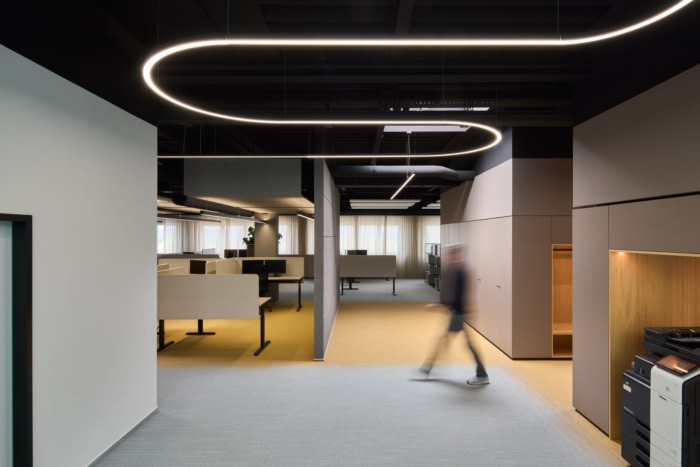
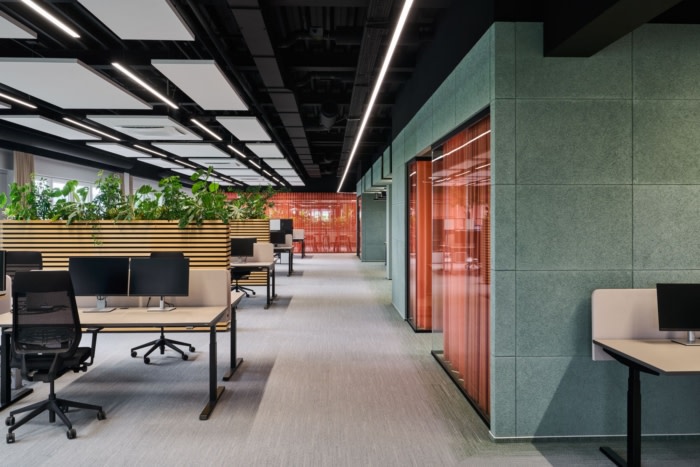
The current office space was originally built as part of the production hall and was simply converted into office space around 25 years ago. The load-bearing hall structure—including the striking trapezoidal sheet metal ceiling with exposed steel beams—was retained.
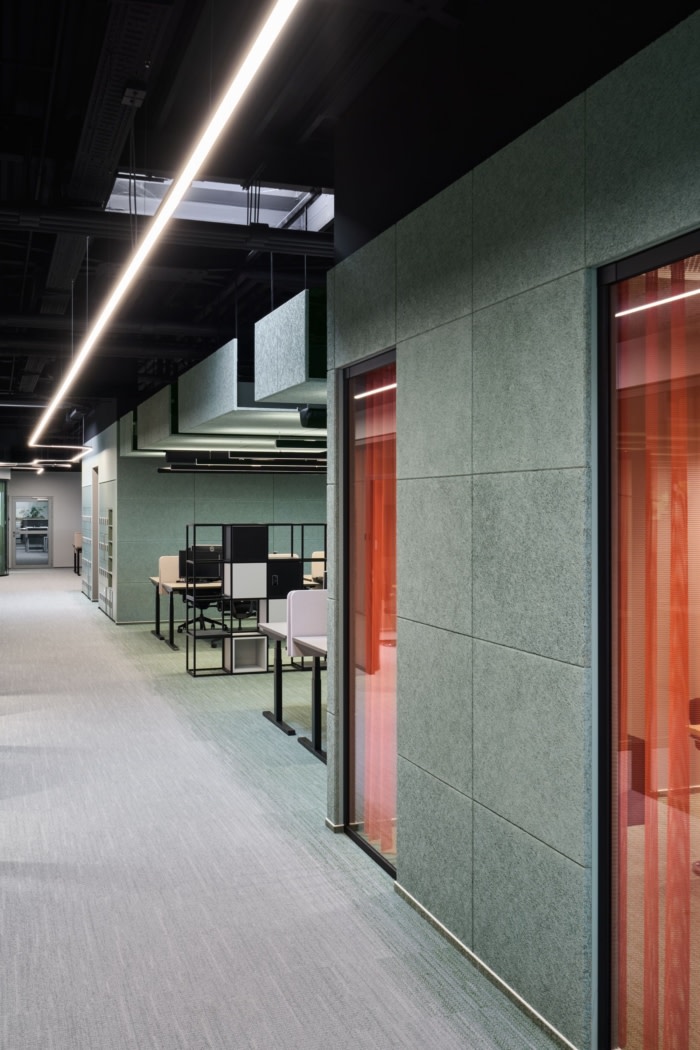
As part of the current modernization, this construction was not only retained, but deliberately integrated into the new design concept. The visible trapezoidal sheet metal ceiling now serves as a design element and a visible reminder of the site’s industrial past.
Concept
The newly designed office space has been comprehensively adapted to current requirements – particularly in terms of acoustics, natural lighting, and a pleasant indoor climate. The areas that were previously only temporarily repurposed have been completely modernized in terms of technology and design.
The office space is divided into three construction phases, which are functionally connected but can each be used independently. Each section houses different departments and areas of responsibility.
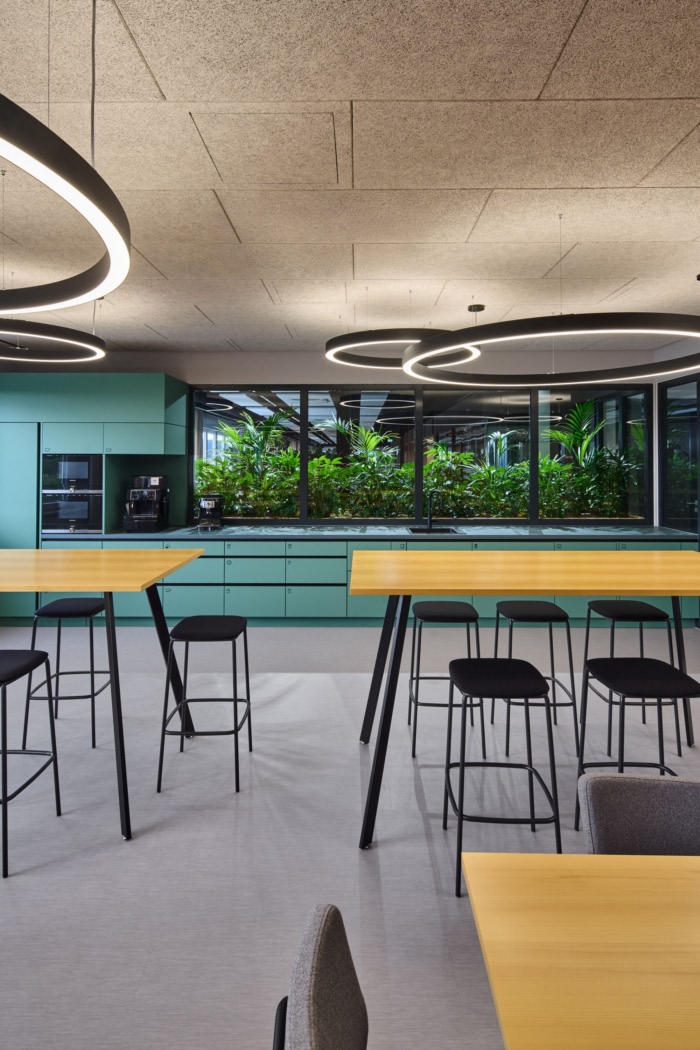
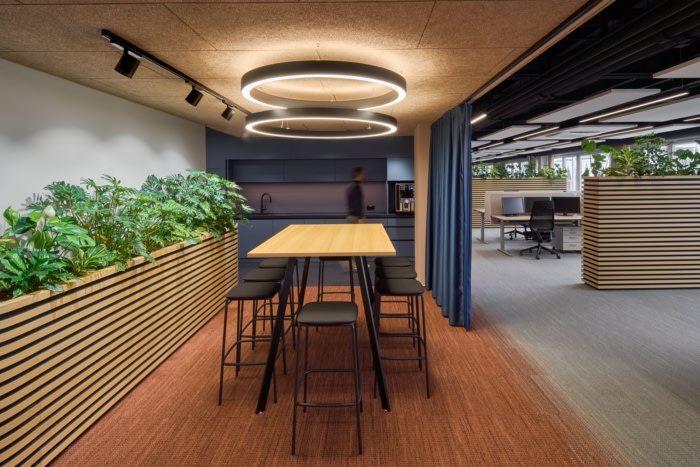
The upper floor has two office areas connected by a central collaborative space. This area serves as a meeting place and communication zone with an integrated kitchen, seating niches, and open exchange opportunities.
On the ground floor, a similar meeting area is located within the central core area, which also offers space for informal communication.
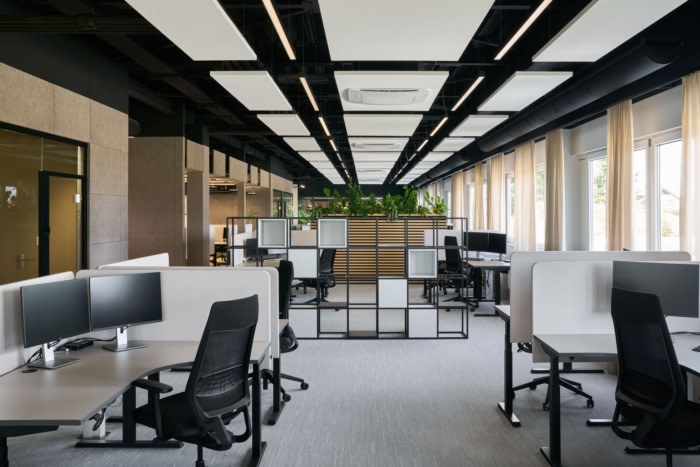
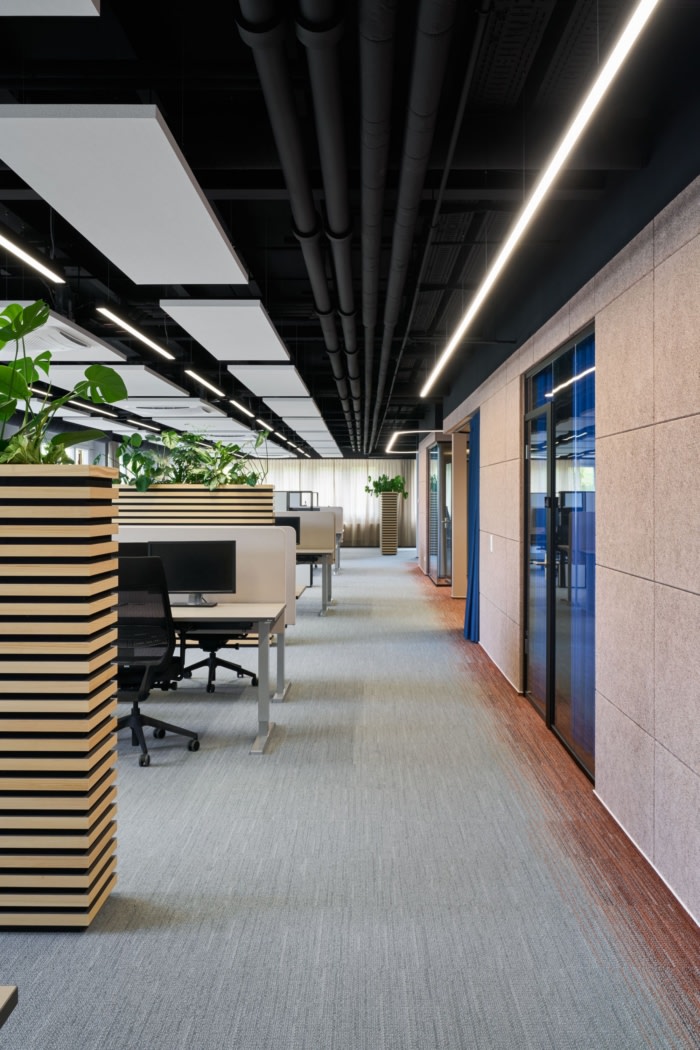
The workstations are consistently arranged along the north facade to make the best possible use of daylight and at the same time ensure glare-free working conditions.
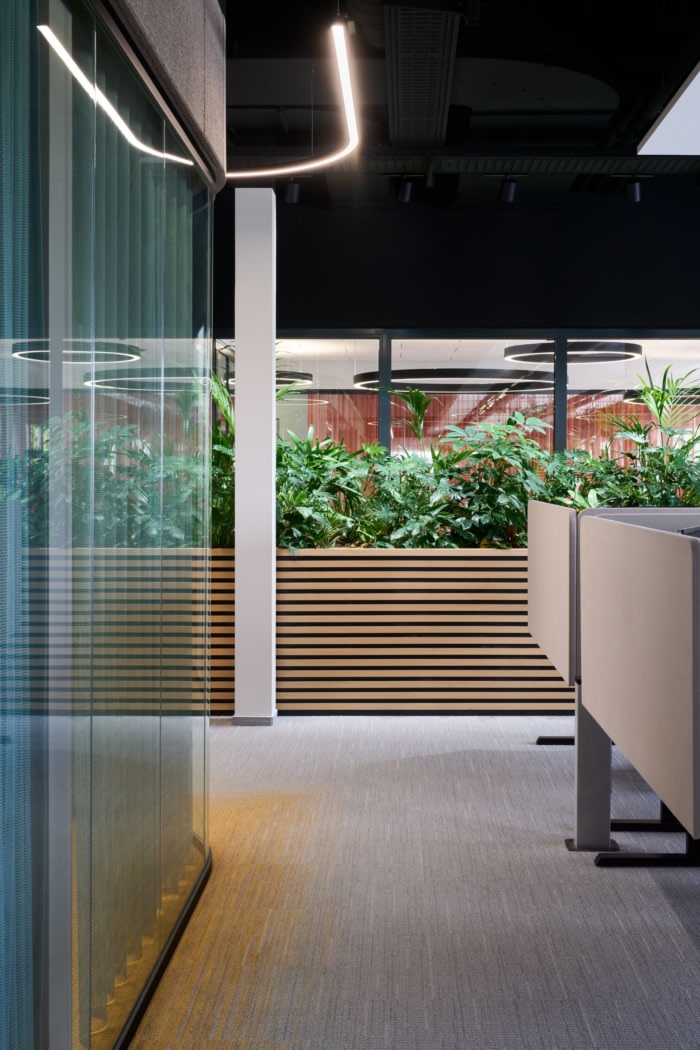
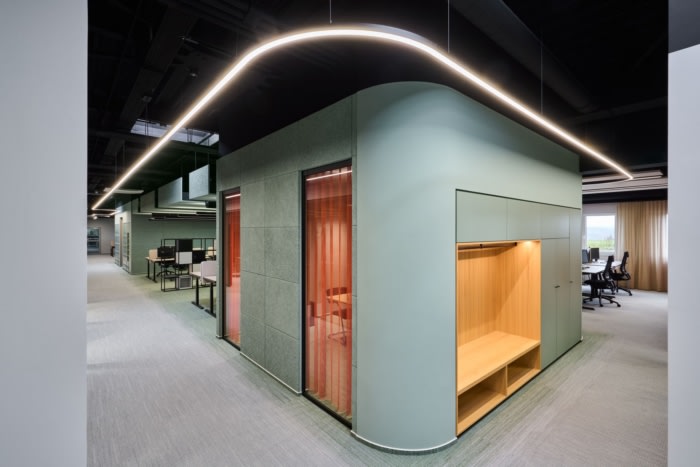
The meeting and retreat rooms are centrally located in the so-called cores, which are located inside the office areas.
In addition, there are further meeting rooms along the production hall that provide specific insights into the adjacent production area, thereby strengthening the connection between the office and production areas.
Open Office
As part of the redesign, an open-office concept with desk sharing was introduced. There are no longer any fixed workstations—all workstations are used flexibly. The total number was reduced to around 70% of employees.
This reduction in space enabled the creation of additional meeting rooms, quiet areas, and collaborative zones that specifically promote cooperation and communication in everyday life.
A booking system for workstations was deliberately not introduced in order to ensure maximum flexibility.
Each employee has a personal locker available for the safe storage of personal items.
In addition, central cloakroom areas have been created where jackets and bags can be stored. This prevents workstations from being “reserved” by personal items, which would contradict the open concept.
The open-office concept promotes exchange, allows for retreat, and offers a high degree of flexibility in everyday work.
Development and change process
A central element of the project was the color and material concept, which was developed in a user workshop together with the employees.
This revealed a desire for a design that referenced the rural surroundings, with brightness and clear contrasts.
User participation was crucial for acceptance of and identification with the new working environment.
Design
A special architectural highlight is the visible trapezoidal sheet metal roof from the original hall structure. This was not hidden, but deliberately integrated into the redesign and now characterizes the new office area as a striking design element.
The color and design concept was divided into three thematic sections:
• Section 1: Warm, contrasting tones – inspired by the forest and the light moods of an autumn evening
• Section 2: Natural, earthy colors – inspired by the grain fields around Holzbronn
• Section 3: Nuances of red sandstone and blue sky – a reference to the landscape of the Calw district
In addition to the design implementation, all technical building equipment was also renewed to ensure a contemporary indoor climate and energy-efficient building technology.
Design: arc+
Photography: Jan Kaiser