
AstraZeneca Offices – Shanghai
M Moser Associates designed the AstraZeneca offices in Shanghai to foster collaboration and sustainability through flexible meeting spaces, integrating innovative energy solutions and health-focused design aligned with the company’s strategic growth.
In response to business growth and evolving working styles, AstraZeneca undertook the expansion and upgrade of the meeting floors at its Global R&D China Centre in Jing’an, Shanghai. The brief called for an open, flexible and multifunctional environment, enabled by the integration of architecture, engineering and digital infrastructure.
The project expresses the AstraZeneca brand in space. It supports new patterns of collaboration and advances the company’s ambitions in zero carbon, digital transformation and long-term growth.
At a glance
1. An open, flexible and sustainable meeting environments aligned with AstraZeneca’s broader business strategy.
2. Integrating human-powered energy systems and carbon data to embed zero-carbon principles into operations.
3. Embedding health into everyday routines through intuitive, wellbeing-led design strategies.
Delivering innovation through an integrated solution
Our strategy, design, engineering and sustainability teams worked in close collaboration to deliver a space that balances adaptability, technical innovation, and long-term value.
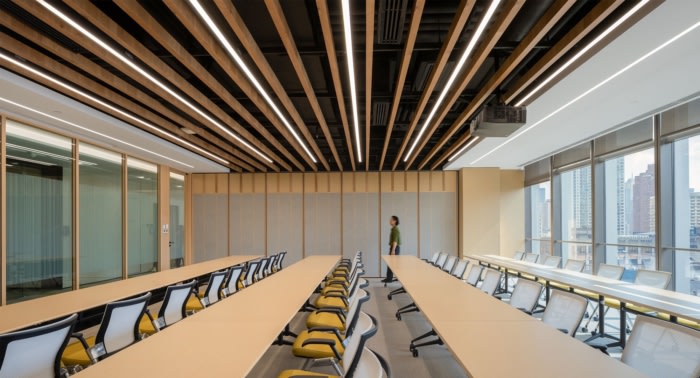
A modular layout and flexible functional zones enable the meeting floors to support a wide range of collaboration scenarios. This improves space utilisation and operational performance. At the same time, we embedded innovative solutions—such as human kinetic energy recovery systems— through an integrated delivery approach that aligned all disciplines from the outset.
This integrated approach delivered a highly efficient, future-ready prototype, improving space utilisation while reducing energy use and supporting more sustainable day-to-day operations.
Making sustainability visible and tangible
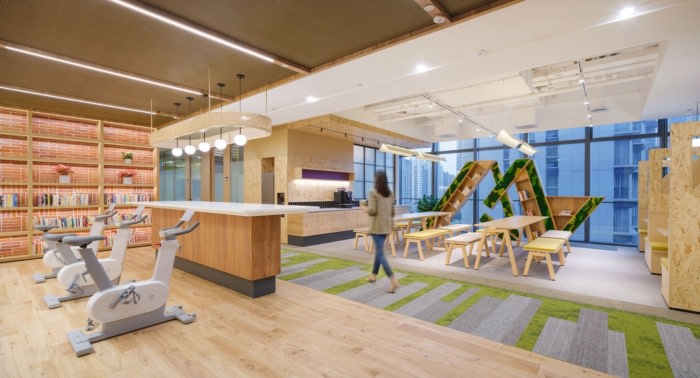
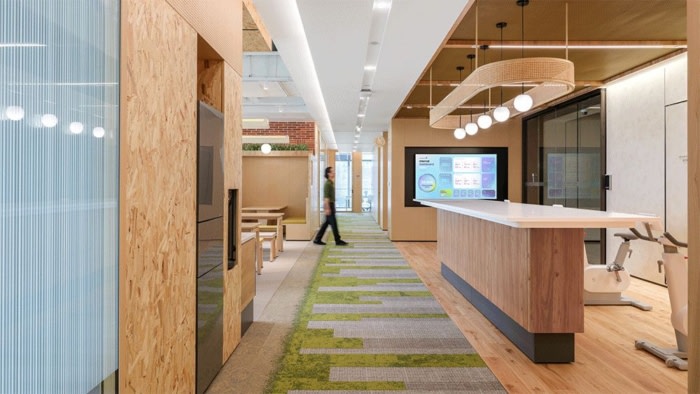
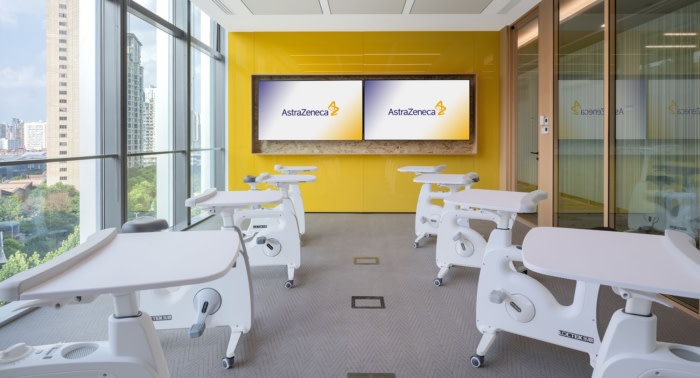
Zero carbon is embedded into everyday experience rather than treated as an abstract target. Energy-harvesting flooring and human-powered pedal systems generate clean energy through everyday use. Real-time dashboards visualise individual and collective contributions, making sustainability visible, intuitive and engaging.
Integrating these systems into the workplace posed challenges and required close coordination across design and engineering to ensure performance, durability and user comfort.
Our engineering team addressed these challenges through a series of innovative solutions:
Energy-generating flooring
Piezoelectric materials were optimised through improved encapsulation, durability and circuit integration, enabling the flooring to withstand high foot traffic in public areas while increasing power output to meet real-world performance requirements.
Human-powered meeting bikes
Meeting bikes were redesigned as interactive systems that integrate ergonomics, energy generation and data visualisation. This transforms physical activity into usable power and a visible sustainability touchpoint.
Microgrid integration
Dedicated energy storage solutions safely collect, store and manage power generated by these distributed systems. Real-time monitoring and intelligent energy management ensure efficient operation and system reliability.
A zero-carbon vision embedded at every stage
AstraZeneca’s long-term commitment to sustainability and ESG shaped the project from the outset. Our team embedded zero-carbon objectives across design, construction and daily operation through a coordinated set of strategies:
– Prioritise renewable, low-carbon, and locally sourced materials to reduce embodied carbon across the building lifecycle.
– Generate clean energy on site by converting everyday human activity, supporting a balance between self-generation and self-consumption.
– Optimise operational performance through high-performance HVAC and smart lighting systems, which manage over 90% of energy and water use.
– Track and manage energy, water, and carbon through a dedicated data platform, enabling informed ESG decision-making and continuous optimisation.
Divert 95% of construction waste from landfill through reuse and recycling.
– Together, these measures improve operational efficiency and foster a shared conscious culture.
Supporting wellbeing through multi-dimensional experience
Health and wellness sit at the core of AstraZeneca’s mission and are equally central to its workplace values. The expanded meeting floors integrate these principles. Lighting, air quality, acoustics and behavioural design support both physical and cognitive performance.
Intelligent lighting: Full-spectrum lighting systems simulate natural circadian rhythms, supporting physiological balance and sustained focus throughout the day.
Acoustic strategies: Spatial zoning, sound-absorbing materials and quiet booths create an environment that balances collaboration with focused, individual work.
Indoor air quality: A dual approach combines high-efficiency mechanical air purification with biophilic filtration. Real-time monitoring of PM2.5, CO₂ and TVOC levels is paired with abundant planting to create a healthier, more resilient indoor ecosystem.
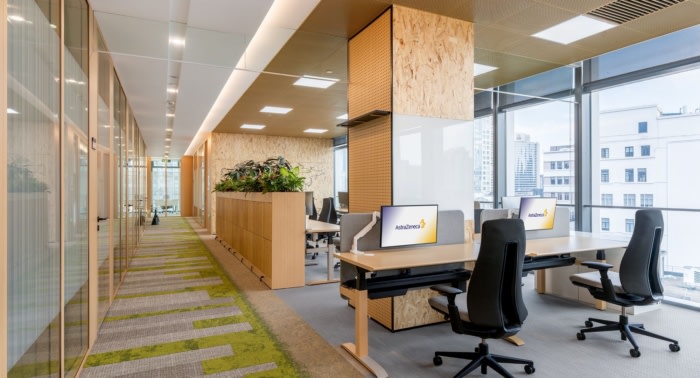
Encouraging healthy movement: Height-adjustable desks, flexible work settings and fluid circulation paths naturally promote movement and physical activity throughout the workday.
Beyond meeting immediate functional needs, the upgraded meeting floors anticipate AstraZeneca’s evolving organisational strategy. By integrating stewardship, smart technologies and and human-centric design, the project ensures wellbeing is supported and embedded into everyday office life, not just an added layer.
AstraZeneca’s Global Strategic R&D Centre in Shanghai delivers on the promise of building a healthier future for all, pairing measurable performance improvements with a workplace that translates strategic intent into an operational, accountable, and adaptable environment.
Design: M Moser Associates
Photography: Edward Shi
















Now editing content for LinkedIn.